 cs




How should you wash and care for clothing with DTF prints? Learn the best practices for washing, drying and ironing,...
 Petr Dvořák


 (Web) (554 × 640 px) (5).png "LeftBanner 1")


How should you wash and care for clothing with DTF prints? Learn the best practices for washing, drying and ironing,...

Which materials can DTF transfers be applied to? Learn how DTF performs on cotton, polyester, blended fabrics and...

How do you apply a DTF transfer to fabric correctly? Learn how to set heat press temperature, time and pressure, why...

Is your DTF printing process not working properly? Discover the most common DTF printing problems, including nozzle...

Which cleaning fluid should you use for a DTF printer? Learn the differences between Cleaning Fluid, Flushing Fluid...

How do you clean a DTF printer properly and prevent printing problems? A practical guide to regular maintenance of...
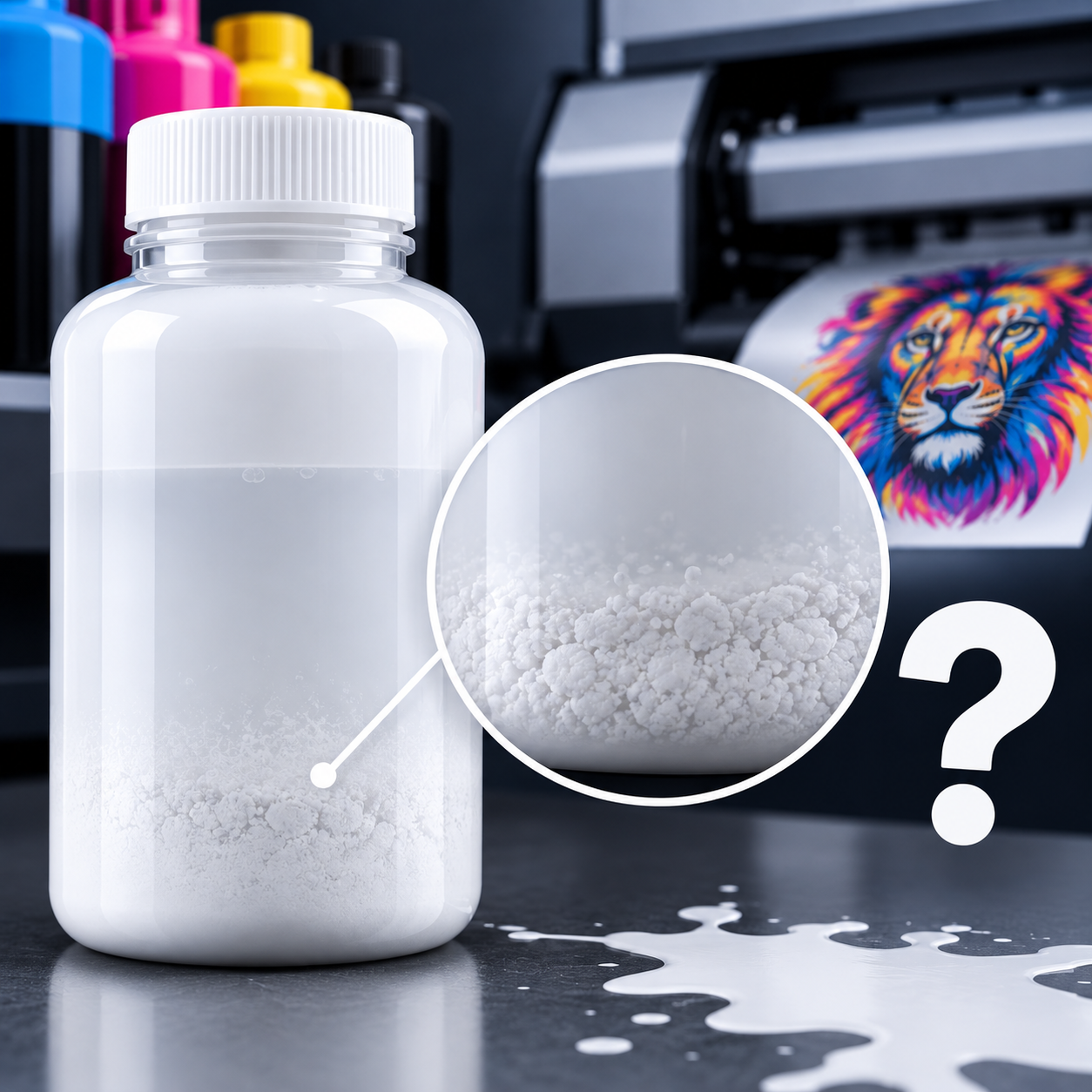
Why does white DTF ink settle, and when does sedimentation become a problem? Learn why white pigment settles, how ink...
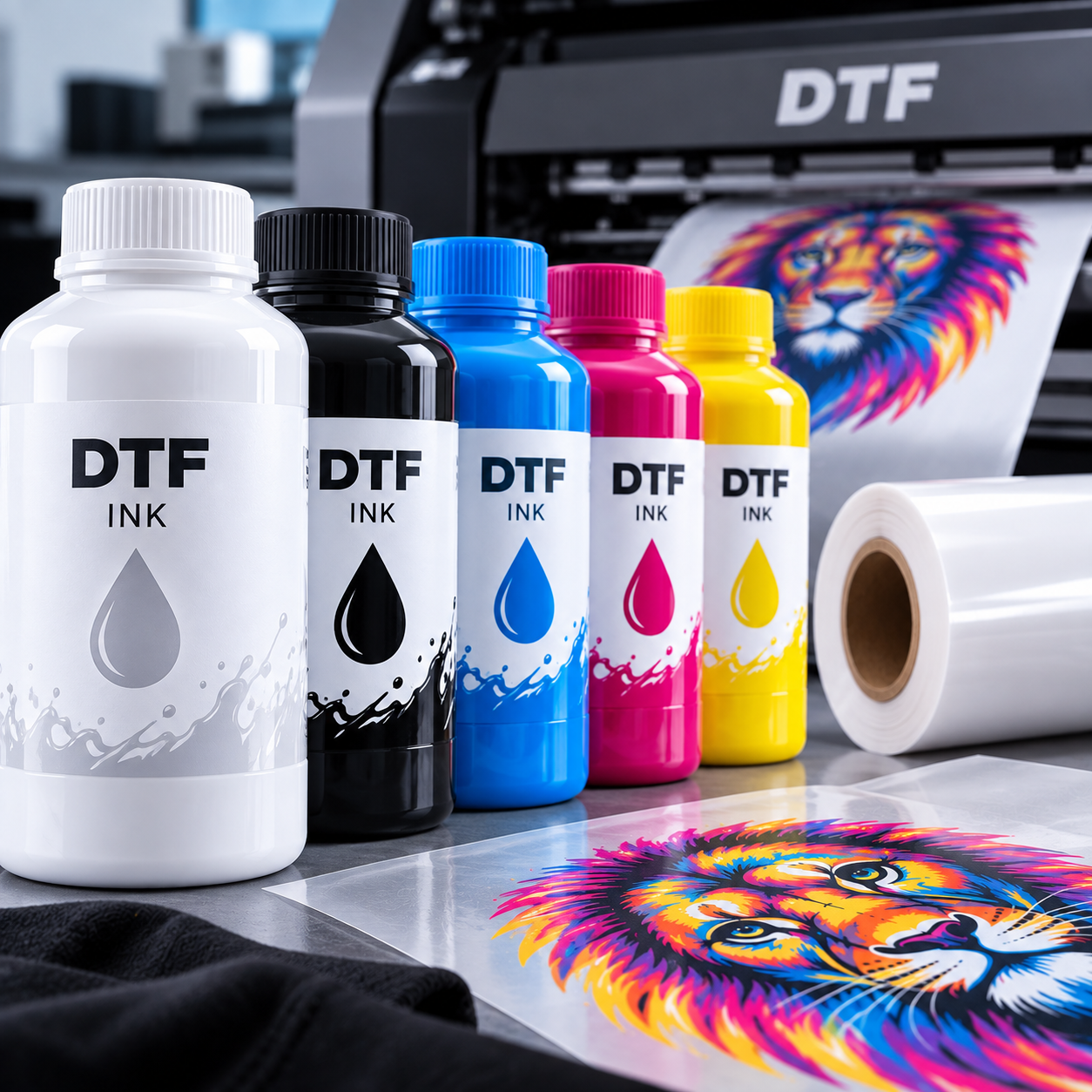
How do you choose the right DTF ink? Learn the difference between CMYK and white DTF ink, why printhead compatibility...

Is your DTF transfer peeling or failing after washing? Discover the most common adhesion problems – from DTF powder...
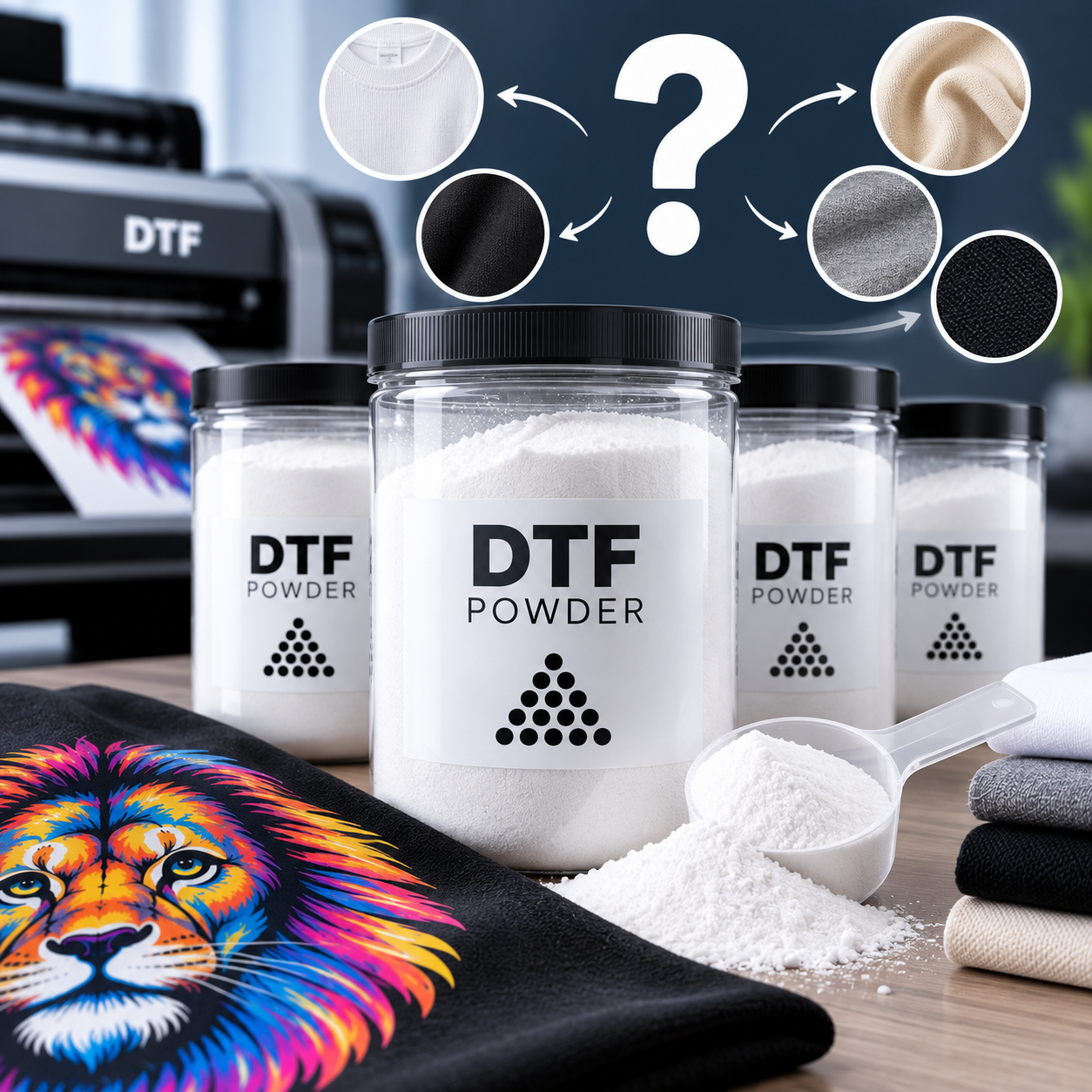
How do you choose the right DTF adhesive powder? Learn what TPU powder is, how it affects adhesion and durability,...
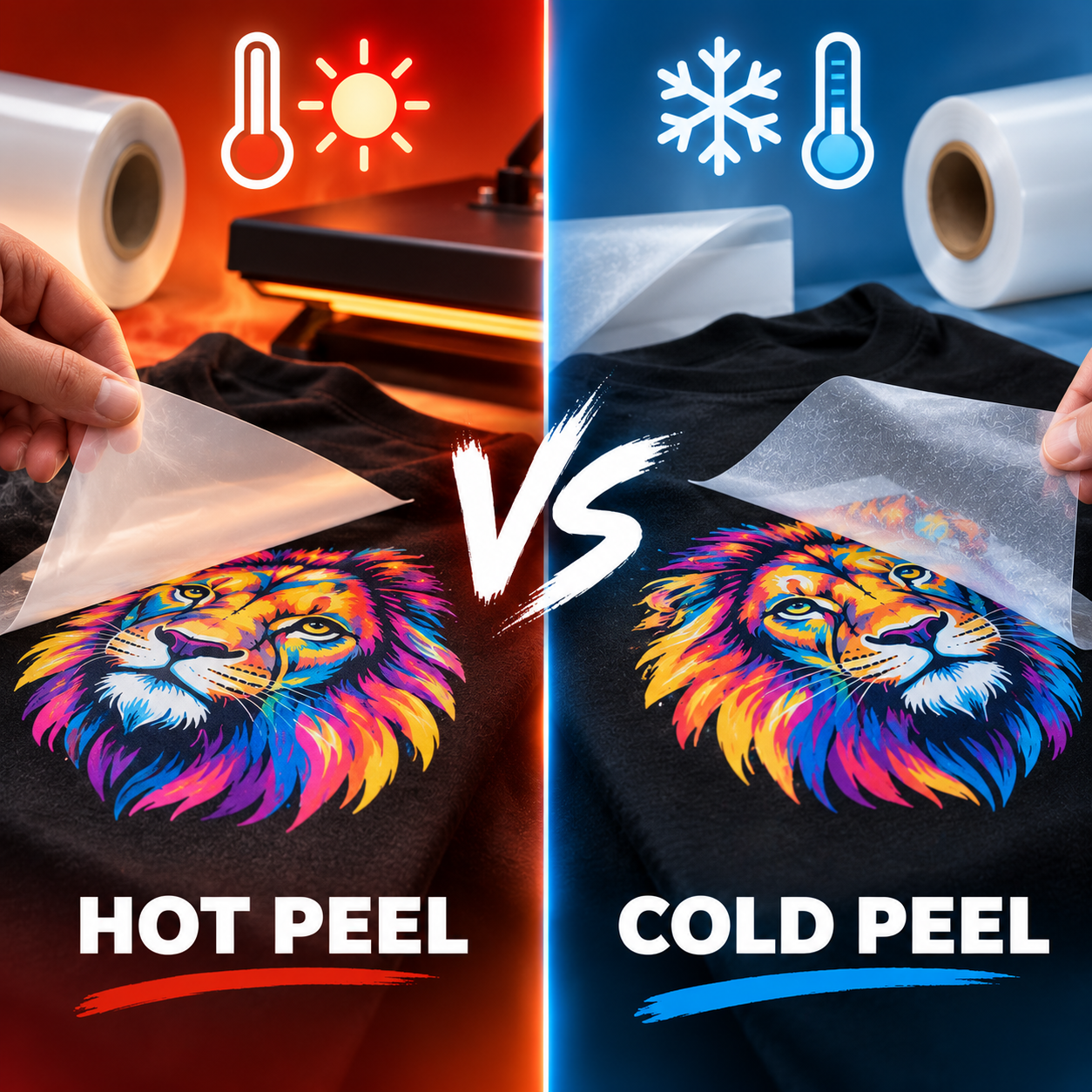
When choosing DTF film, you will often come across the terms Hot Peel and Cold Peel. The main difference between them is when the carrier film can be removed from the textile after the transfer has been applied.
At first glance, this may seem like a minor difference. In everyday production, however, the peeling method can affect workflow speed, production organisation, and the overall productivity of your DTF operation.
In this article, we will explain the differences between Hot Peel and Cold Peel films in detail and show you which parameters to consider when comparing them.
The word Peel refers to the way the DTF carrier film is removed after the design has been transferred onto the textile using a heat press.
Depending on when the film can be removed, we mainly distinguish between:
Hot Peel – the carrier film is removed while hot.
Cold Peel – the transfer must be allowed to cool according to the manufacturer’s recommendations before the carrier film is removed.
This difference directly affects the workflow when applying DTF transfers.
With Hot Peel DTF film, the carrier film can be removed while hot according to the application parameters of the specific material.
After the pressing cycle is completed, there is therefore no need to wait for the transfer to cool completely.
Speed is one of the main reasons why high-quality Hot Peel films can be particularly attractive for professional DTF production environments.
TIP: The more garments you process, the greater the impact of saving time on each individual application.
With Cold Peel DTF film, you need to wait after pressing until the transfer has cooled according to the manufacturer’s recommendations before removing the carrier film.
This adds a cooling stage to the production process.
In practice, the workflow may look like this:
pressing
↓
cooling the transfer
↓
removing the carrier film
Cold Peel is not automatically a worse or better solution than Hot Peel. It is simply a different technological process and workflow.
| Parameter | Hot Peel | Cold Peel |
|---|---|---|
| Carrier film removal | while hot | after cooling |
| Waiting for cooling | generally no | yes |
| Workflow speed | generally faster | generally slower |
| Serial production workflow | very efficient | requires a cooling stage |
| Following application parameters | essential | essential |
IMPORTANT: The Hot Peel or Cold Peel designation alone does not determine the overall quality of the film. The specific product and the entire DTF system should always be evaluated.
This is a very important point.
If two DTF films are labelled Hot Peel, it does not mean that they have the same application properties.
They can differ significantly in:
For this reason, simply looking for the Hot Peel designation is not enough.
You should also compare the actual application parameters of the specific film.
Professional B-Flex DTF Hot Peel films are a good example of how significantly individual Hot Peel systems can differ.
Their application parameters enable a very fast application process:
APPLICATION TEMPERATURE: 130 °C
PRESSING TIME: just 4 seconds
PEEL: Hot Peel – peel while hot
The combination of a low application temperature and very short pressing time can provide a significant advantage in serial production.
When applying a single transfer, a difference of a few seconds may not seem particularly significant.
The situation changes considerably when processing larger quantities.
If you produce dozens or hundreds of garments, the time required for each application is repeated again and again.
A shorter pressing cycle can therefore contribute to:
TIP: When comparing DTF films, do not look only at the price per metre. Also consider the time required to apply each transfer.
The difference between Hot Peel and Cold Peel affects more than just the pressing process itself.
It can also influence how production is organised.
With a Cold Peel system, you need to allow time and space for transfers to cool before removing the carrier film.
With a Hot Peel system, the workflow can be more straightforward:
position the garment
↓
press
↓
Hot Peel
↓
next garment
This can be particularly beneficial when repeatedly applying larger quantities of transfers.
No.
Hot Peel primarily describes the method of removing the carrier film. It does not automatically determine the quality of the finished transfer.
The final quality is influenced by the entire DTF system:
DTF film
↓
DTF ink
↓
TPU adhesive powder
↓
curing
↓
heat press parameters
↓
textile
The quality of a transfer therefore cannot be judged solely by whether the film is Hot Peel or Cold Peel.
Hot Peel can be a particularly attractive option if:
For professional production environments, the speed of a Hot Peel system can therefore become an important economic factor.
Cold Peel can be suitable, for example, if:
WE RECOMMEND: Do not change a reliable production system simply because of the Hot Peel or Cold Peel designation. Always compare the complete process, final quality, and actual productivity.
A common mistake is assuming that Hot Peel means the carrier film can be removed in any way immediately after opening the heat press.
Each manufacturer may specify particular application conditions.
Always follow the recommended:
IMPORTANT: Always follow the current technical parameters specified for the particular product.
There is no single universal answer for every DTF production environment.
When making your decision, we recommend comparing:
If speed and high productivity are among your main priorities, a high-quality Hot Peel system can be a very attractive option.
The main difference is when the carrier film is removed. Hot Peel is removed while hot, whereas Cold Peel requires the transfer to cool according to the manufacturer’s recommendations before the carrier film is removed.
In terms of workflow, generally yes. It eliminates the need to wait for the transfer to cool completely before removing the carrier film.
Not necessarily. The Hot Peel or Cold Peel designation alone does not determine transfer quality. The final result depends on the quality of the materials and the correct setup of the entire DTF process.
No. Individual films can differ significantly in temperature, pressing time, pressure, and other application requirements.
Because the time required for each application is multiplied by the number of garments being produced. A difference of just a few seconds can become significant across hundreds of applications.
If you are unsure whether Hot Peel or Cold Peel is more suitable for your production, we will be happy to help you choose the right solution.
For a more accurate recommendation, it is useful to know:
Based on this information, it is easier to determine which system is best suited to your specific production process.
B-Flex DTF Hot Peel Films
How to Choose the Right DTF Film? A Complete Guide
How to Set Up a Heat Press Correctly for DTF
DTF Adhesive Powders
Leave a comment